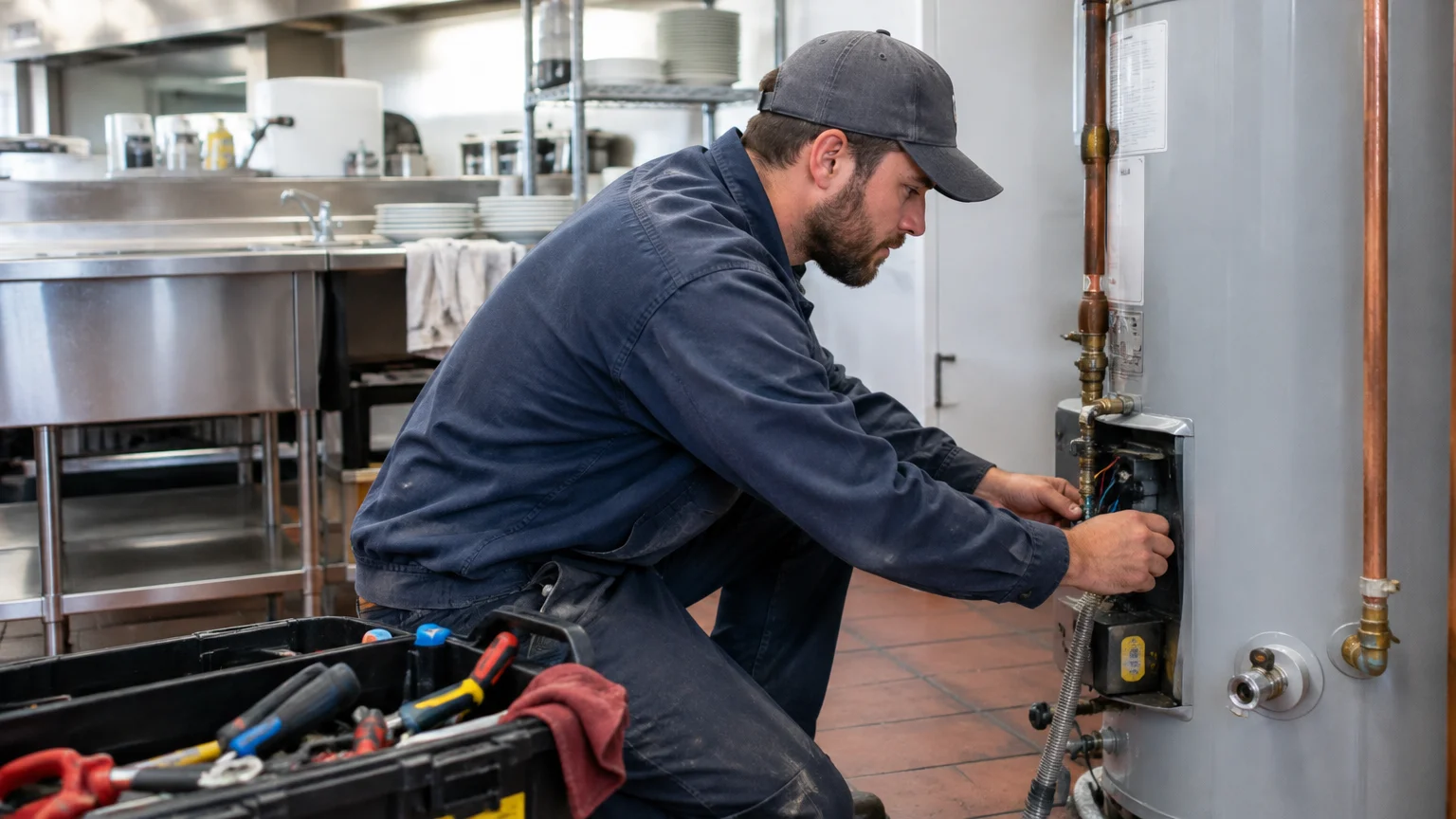
When there is no hot water at a business, the cause may be a failed heater, lost power, a gas issue, a closed valve, or heavy use. Safe visual checks may help find the problem. Gas leaks, electrical faults, leaks, and commercial water heaters need prompt help from a qualified plumber.
Why is there no hot water at a business?
No hot water at a business often starts with the water heater, its fuel supply, or the pipes that carry hot water. The unit may lose power, fail to ignite, trip a safety control, or have a broken heating part. A closed valve may also stop hot water from reaching sinks, showers, or kitchen fixtures.
In Live Oak, commercial water heaters work harder than most home units. Restaurants, offices, hotels, medical sites, schools, and stores may have many fixtures running at once. A busy morning can use all the hot water in a tank before it can heat more. An old or small unit may also struggle after a business adds staff, guests, restrooms, or equipment.
What water heater problems can cause a loss of hot water?
Common causes include a failed heating element, bad thermostat, faulty burner, blocked vent, broken ignition system, or damaged control board. Sediment can settle inside a tank and make heating less effective. Rust can harm the tank, fittings, or anode rod. An anode rod is a metal part that helps slow tank rust.
Tankless systems can stop heating when the flow sensor, heat exchanger, filter, or power supply has a fault. The unit may also shut down when several fixtures need more water than its rated flow. Tankless water heater installation should fit the building’s peak use, fuel type, venting needs, and electrical service.
Could the problem be in the business plumbing?
Yes. A failed mixing valve, blocked pipe, broken recirculation pump, or crossed hot and cold connection can affect many fixtures. A mixing valve blends hot and cold water to control the water temperature. When it fails, water may stay cool even when the heater works.
One fixture may have its own issue, such as a worn cartridge or blocked aerator. If every sink and restroom has the same problem, check the heater, main hot water pipe, controls, or recirculation system. Live Oak Plumbing can help businesses tell the difference between one fixture problem and a wider system failure.
What should you check when a commercial water heater stops working?
A business owner or manager can make a few safe visual checks before booking service. First, see whether the problem affects one fixture or the whole building. Staff should also think about any recent power outage, building shutdown, renovation, or plumbing repair.
Which checks are safe for staff to perform?
Staff may check these items without removing covers or touching inside parts:
- See whether nearby hot water taps have the same problem.
- Look for a tripped breaker without opening the water heater.
- Check whether a visible control shows an error message.
- Look for water around the tank, valves, or nearby floor.
- Confirm that obvious shutoff valves are still open.
- Note odd sounds, smells, smoke, or changes in water color.
A business should not reset a breaker or safety control again and again. Staff should not remove electrical panels, change gas controls, relight equipment without clear maker directions, or bypass a safety device. These steps can cause fire, shock, burns, or more equipment damage.
What should staff do if they smell gas?
If staff smell gas, they should leave the building and keep others away. They should not use switches, phones inside, flames, or other items that may make a spark. Once outside, they should contact the gas utility or emergency services as local safety rules direct. A qualified professional should check the system before normal use starts again.
A leak needs quick action even if there is little or no odor. Water can harm walls, floors, stock, equipment, and electrical systems. Leaks and Burst Pipes service may be needed when water comes from supply lines or nearby plumbing instead of the heater.
When should a business repair or replace its water heater?
Repair may work when the tank is sound and the problem involves a replaceable part. Examples include a thermostat, heating element, ignition part, valve, sensor, anode rod, or control. A repair can restore service when the unit has enough capacity and no major rust damage.
Replacement becomes more likely when the tank leaks, the unit has heavy rust, parts are no longer available, or failures keep coming back. A business may also need a new system after changes in staff, hours, restroom use, or production needs. The right choice depends on the unit’s age, size, fuel, venting, controls, and expected use.
When is water heater replacement a better choice?
Replacement may be wise when the old unit cannot meet busy-time demand or has damage that may cause more downtime. A professional can compare a standard storage tank with a tankless system. Storage tanks keep heated water ready. Tankless systems heat water as it flows, but they still need the right size and power or fuel supply.
A replacement plan should account for recovery time, fixtures running together, space, venting, drainage, water pressure, and local code rules. Commercial sites may also need special controls, larger tanks, or a recirculation loop. Water Heater Installation should be done by a qualified professional who can check safe connections and proper operation.
How can a business choose the right service provider?
A business should seek a plumbing company that works with commercial water heaters and understands restroom use. The provider should explain the likely cause and point out safety concerns. It should also explain whether repair or replacement makes sense. The final cost is confirmed on a quote that clearly lists the work and equipment.
Search results may show many plumbing businesses near me, but location alone does not show commercial experience. A business should review licensing rules, insurance, service areas, and experience with its type of heater. Live Oak Plumbing serves local property owners and can help plan the next step for the building.
How can a business restore hot water and prevent repeat problems?
Professional service often starts with a full system check. The plumber may test power, fuel, controls, water temperature, pressure, valves, venting, tank condition, and connected fixtures. The check should also consider demand during busy times, not only the heater’s condition when the building is quiet.
A technician may repair a failed part, clear a safe blockage, replace a valve, restore a connection, or suggest a suitable new unit. If water damage is present, the business may need urgent plumbing help before heater work can finish. The main goal is a safe diagnosis and a return to reliable hot water.
What maintenance helps commercial restrooms and heaters?
A written maintenance plan can help prevent sudden shutdowns. It should follow the equipment maker’s directions and match how the building is used. Staff can report changes early instead of waiting for a full failure.
Useful planning steps include:
- Check for damp areas, rust, drips, and odd sounds.
- Watch for slow recovery or changing water temperature.
- Keep space around the heater clear for safe service.
- Test restroom fixtures for leaks and poor shutoff action.
- Schedule professional checks for controls, valves, and connections.
- Record repairs, error codes, shutdowns, and changes in demand.
Simple upkeep is safe for staff when it involves visual checks and reporting. Internal repairs, gas work, electrical work, venting, pressure concerns, and tank replacement should be left to a qualified professional. The same rule applies to a water heater that serves several restrooms or key business operations. If slow drains or backups also affect the site, drain cleaning may help with that separate plumbing issue.
Key takeaways
- A failed heater is only one possible cause of lost hot water.
- Heavy use can reveal a sizing or recovery problem.
- Staff should make visual checks but avoid opening equipment.
- Gas smells, active leaks, and electrical faults need urgent care.
- Repair or replacement depends on safety, condition, capacity, and reliability.
Frequently Asked Questions
How do you check for gas leaks near a water heater?
Staff should not test a suspected gas leak with a flame or electrical device. If gas is smelled, everyone should leave the building and avoid making sparks. From a safe place, contact the gas utility or emergency services as directed. A qualified plumber or gas professional should inspect and approve the system before use.
Can a running toilet cause a business to lose hot water?
A running toilet does not usually stop a water heater from making hot water. It can waste water and increase demand on the building’s plumbing. A blocked pipe, failed mixing valve, or pressure problem may affect both restrooms and hot water. These causes should be checked separately.
Is tankless water heater installation right for a business?
Tankless water heater installation may suit a business with the right demand, power or gas supply, venting, and space. It does not automatically fix low hot water capacity. A professional must size the system for peak flow and check whether several fixtures may run together.
Should a business call a plumber for water heater repair?
A business should call a plumber for water heater repair when the unit serves several fixtures, stops working often, leaks, shows an error, or involves gas or electrical parts. Staff can report symptoms and make safe visual checks. They should not remove panels, bypass controls, or attempt inside repairs.
Conclusion
No hot water at a business may come from a control issue, heavy use, a plumbing fault, or a failing commercial heater. Safe checks can help narrow the problem, but trained diagnosis matters when the system involves gas, electricity, leaks, pressure, or many restrooms. In Live Oak, business owners can arrange help for these concerns. Contact us to arrange professional help from Live Oak Plumbing for a commercial water heater or restroom plumbing concern.