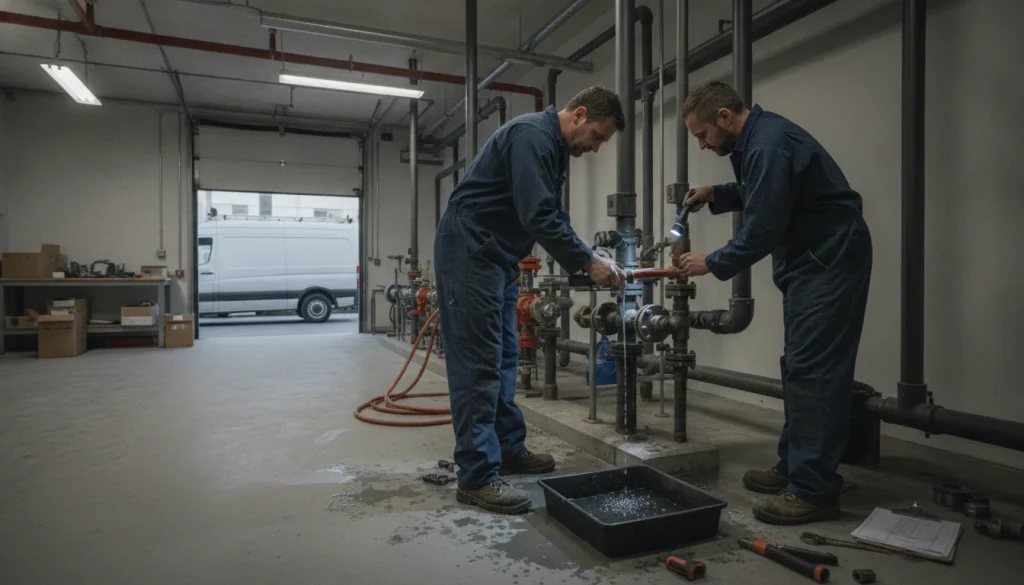
A pipe bursts after closing and floors start to flood—this is when an after hours commercial plumber matters. An after-hours commercial plumber is a licensed professional who responds outside standard business hours to contain urgent failures, protect people and property, and keep essential systems operating. This guide explains exactly when to call, what to do first, and how Live Oak Plumbing supports local businesses with dependable 24/7 response.
In Live Oak, many facilities run late into the evening. Restaurants, gyms, and offices still need hot water, working drains, and safe pressure after-hours. Live Oak Plumbing understands how these operations work and responds with a steady plan that reduces downtime and supports health compliance.
When to Call an After-Hours Commercial Plumber Immediately
Some issues cannot wait for morning. Call right away when safety, health, or core operations are at risk.
- Active leaks, burst pipes, or flooding that can damage walls, floors, or stock
- Sewage backups, blocked mains, or strong odors that threaten health compliance
- No hot water in kitchens, gyms, or care areas that must stay sanitary
- Water heater, boiler, or sprinkler line faults, alarms, or visible steam
These events escalate quickly. Water moves and wicks into materials, and sewage can close a site under health rules. A trained team can isolate the line, clear clogs, and restore safe pressure. For drain issues, schedule follow-up Drain Cleaning to help prevent a repeat and consider Drain Repair if damage is found.
Stabilize the Situation: Immediate Steps Before Help Arrives
Safety first. Keep people clear of wet areas and live power. Quick steps can slow damage before the crew arrives.
- Shut off the main water valve. Use zone valves to isolate the leak if you can.
- If you smell gas, leave the area and call emergency services. Gas Line Plumbing work requires trained professionals.
- Protect electrical systems. Do not touch panels or elevators if water is nearby. Keep doors to risers closed.
- Move stock and paper files. Place buckets and towels to contain drips. Take photos and notes.
- Tell tenants and staff what is safe to use. Mark closed restrooms and sinks.
What not to do: Do not run restrooms during a sewage backup. Do not reset a tripped boiler or water heater more than once. Do not remove backflow covers or sprinkler parts. Wait for a licensed technician.
After-Hours Response, Timelines, and Costs
Night calls follow a clear triage. A dispatcher confirms the risk, sends a truck, and keeps you updated. The crew aims to stop the source, pump down standing water, clear clogs, and make the area safe. Full repairs may follow when parts, permits, or specific access windows are available.
Costs vary by time of day, travel, access limitations, parts, and any required permits. Large pipe repairs, roof drains, or boiler work may need lifts or building shutoffs that add steps. In Florida, local code may require permits or inspections for certain fixes.
Insurance and roles matter. Landlords often handle supply and common areas; tenants may handle fixtures they control. Check your lease and policy, and confirm approval paths before you need them. Temporary stabilization keeps your site open. Then plan the permanent repair, upgrades, or Bathroom Installations during regular hours. Kitchen Plumbing improvements can increase hot water reliability for food service sites.
Selecting the Right 24/7 Commercial Plumbing Partner
Choose a partner that can handle scale and code. Look for stocked vehicles, rapid dispatch, and experience with offices, retail, and multi-unit sites.
- Proven commercial capacity with lift pumps, jetters, cameras, and spare valves
- Code compliance, permits, backflow testing, and fire protection coordination
- Multi-site coverage, clear reports, photos, and a single point of contact
- Ask about dispatch times, on-truck parts, safety training, and how they secure areas
Have key info ready when you call: site address, best entry, shutoff locations, problem history, and who can approve work. This speeds setup and reduces downtime. For high-risk buildings, add Emergency Plumbing to your response plan and share it with your night team. Live Oak Plumbing teams support the Live Oak area with clear communication and post-visit reports.
Frequently Asked Questions
What counts as an after-hours emergency for a business?
Call at once for active leaks, sewage backups, no hot water in kitchens or gyms, failed boilers, sprinkler line damage, or alarms. These can harm people, shut down service, or violate code. A trained after hours commercial plumber can isolate the issue and make the space safe.
How can staff prepare before the plumber arrives at night?
Shut water at the main or zone valve if safe. Keep people away from wet floors and electrical gear. Move stock, set buckets, and take photos. Mark closed fixtures. Share entry points, shutoff locations, and approval contacts so the crew can work right away.
Will the visit fix everything or just stabilize it?
The goal is to stop damage and restore basic use. Full repairs may need parts, permits, or off-hours building access. Your plumber will outline a temporary fix plus a plan for permanent repair, testing, and follow-up services like Drain Cleaning or backflow checks.
Key Takeaways
- Night plumbing issues can threaten safety, health, and revenue—act quickly.
- Shutoffs, safety controls, and clear notes help the crew start faster.
- Costs vary by time, access, parts, and permits—set authorizations in advance.
- Choose a partner with commercial gear, code knowledge, and strong reporting.
Conclusion
Smart planning lowers risk and downtime. With clear steps, code-aware service, and steady updates, your site can stay safe and open. For reliable, 24/7 help across the city, trust Live Oak Plumbing to respond and plan lasting fixes. Need urgent help? Contact us.